About
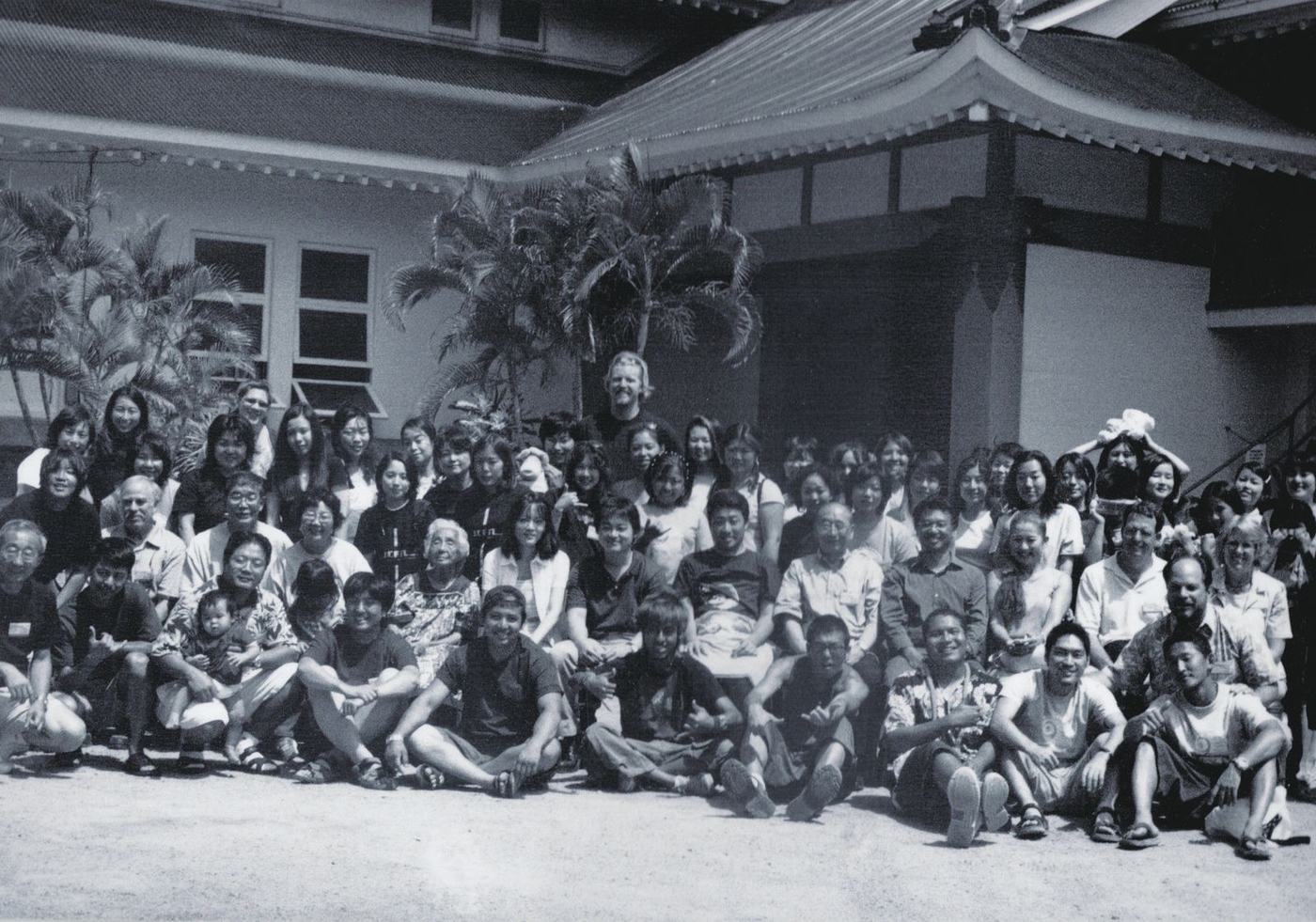
Japanese Christians come to faith abroad. Then they go home, and most of them, without anyone following, quietly stop going to church. JCFN has spent thirty-five years on that one sentence.
Why we exist
JCFN's own words, from the mission statement on jcfn.org.
Currently many Japanese are living abroad for various reasons: ongoing studies, business ventures, international marriages. Under these circumstances, God's work of salvation in the lives of Japanese people is clearly seen as it extends to many different countries. The Gospel touches these people often while living overseas, and many of them become believers there, later returning to Japan.
They can be greatly used after returning to Japan to witness to their families and friends and spread the Gospel message as they get connected to local churches. But in reality, many of these returnees suffer what is often called “reverse-culture shock” beyond the level they expected, affecting even their Christian lives, and as a result, regrettably, many Christians depart from their churches within a few years of returning home.
JCFN exists to close that gap.
JCFN was founded in 1990–91, at the intersection of the U.S. international-student mission movement and the growing recognition that returnees needed dedicated follow-up. According to founder Leiton Chinn, the idea came out of a late-1980s brainstorming conversation with Ned Hale, then head of IVCF USA's international student ministry: hold a conference specifically for returning students, right after the Urbana Missions Convention.
That idea became JCFN. A handful of Japanese students who had recently become Christians started keeping in touch by mail, handwriting articles, keeping the member list, printing and posting. They called themselves the “Urbana-kai.” In the summer of 1991 they renamed it JCFN.
The mark
Why JCFN's logo is a sheaf of wheat. From the 2020 Annual Report.

The wheat in JCFN's logo carries two verses. The first names the problem the organisation was formed around:
“The harvest is plentiful but the workers are few. Ask the Lord of the harvest, therefore, to send out workers into his harvest field.”
Matthew 9:37b to 38
The second explains the single grain in the mark:
“Unless a kernel of wheat falls to the ground and dies, it remains only a single seed. But if it dies, it produces many seeds.”
John 12:24b
The logo was redrawn in 2020, replacing the mark used since 1993. As the report put it: the calling given to JCFN has not changed, and they continue to serve while praying for the day of harvest in Japan.
Statement of Faith
Six affirmations, unchanged since the founding.
Leadership
JCFN runs on a deliberately small team split across California and Tokyo. The Staff Coordinator role rotates between the two directors every two years.
 Setsu ShimizuNorth America Director
Raised in a ministerial family in Osaka; moved to Hawaii at 15. Re-dedicated her life to the Lord at Urbana '90, joined JCFN while at Fuller Seminary, and became director in 1994. Has represented JCFN at I-CARE, the Lausanne Asia-Pacific consultation, and Cape Town 2010.
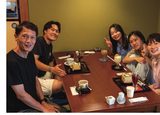 Maki GotoJapan Director
Co-director alongside Setsu. From the 2025 Annual Report: “this year has expanded my perspective in ways I had not experienced before.”
Pastor, Japanese Christian Church of New Jersey.
Yoshio Shibasaki, Plante Moran, Tax General Manager / Operations Manager
Miho Walker, OMF International, missionary
Naoto Kamano, Kansai Bible College, Principal & Himeji Johoku Church, Pastor
Eiko Takamizawa, Torch Trinity Graduate University, Professor of ICS
The wider team
From JCFN's 2025 Annual Report. Associate staff carry most of the regional work across Japan and North America.
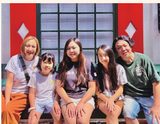
Daisuke Tsuchida
North America Staff
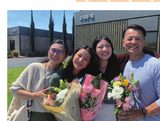
Yuko Ozeki
North America Staff
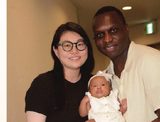
Shiori Kisangala
Japan Staff, resigned May 2026

Megumi Kurata
Associate Staff, Michigan
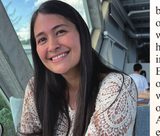
Kristine Reddington
Associate Staff, leadership development

Takako Narcisa
North America Administrative Staff
Yu Hoshino
Japan staff candidate, on deputation
Akari Hirase
Japan staff candidate, on deputation
Izumi Takahashi
Japan Office Administrator
Nine more associate staff serve across Kansai, Kanto, Tokai, Chushikoku, the UK and the US West Coast. Their full bios contain personal testimony and prayer requests, held back from this demo pending subject review with JCFN.